Rust solo survival or squad play which is better for learning the game and why
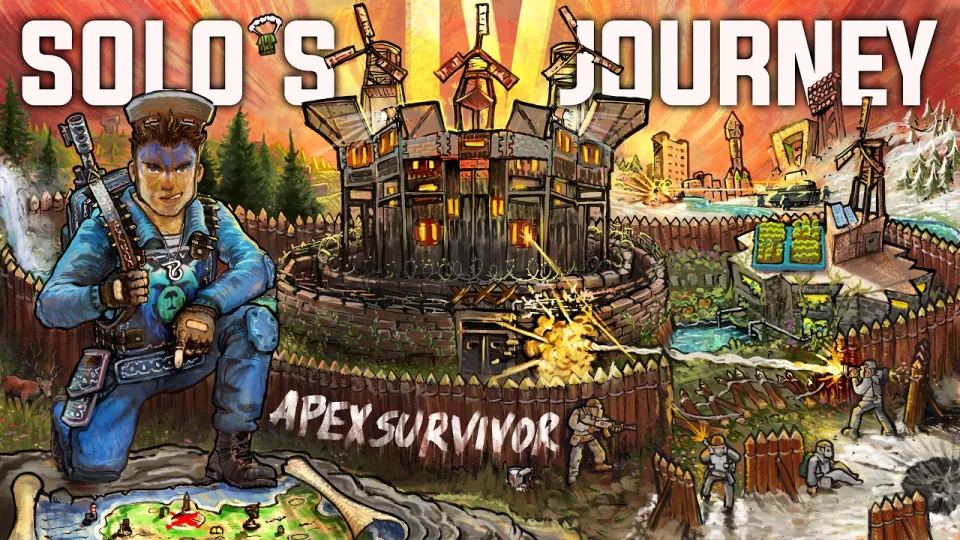
Video: Rust - A Solo's Journey IV: Apex Survivor (Movie)
Need articles like this for your video? They help promote it on YouTube and Google — order them in the Telegram bot @sat_sit_bot. Articles with your video embedded are written and posted by the bot itself — on popular topical sites (no ads). Free trial — 50 articles.
· based on the channel Blooprint
Key takeaways
- Blooprint survived 14 days of solo Rust and turned it into a nearly five-hour movie with 12 chapters plus an epilogue.
- The run was filmed and edited over 300+ hours, with a dedicated tracker site for checking progress by timestamp.
- Solo Rust means one player covering farming, building, crafting, and defense with no clan to share the load.
- A solo base like a triangle core trades meta efficiency for cheaper upkeep and lower raid attention.
- The channel passed 2.5M subscribers with this project, and the video pulled millions of views within weeks.
Rust is better solo if you want to learn every system of the game yourself, and better with a squad if your goal is fast progression and large-scale PvP. Solo play forces you to handle farming, base design, crafting, and defense alone, which builds deeper game knowledge but slows everything down. Blooprint's 14-day solo run, documented in "A Solo's Journey IV: Apex Survivor" and tracked live at solosjourneytracker.com, is a useful case study for what that trade-off actually looks like over a long wipe.
What a 14-day solo Rust run actually involves
A long solo wipe is a scheduling problem as much as a combat one, because one player has to cover every role a clan splits between five or ten people. On a vanilla server, a solo player typically spends the first day on a starter base and basic weapons, the next few days on scrap farming and workbench progression, and the rest of the wipe balancing upkeep, raids, and defense. Blooprint's project stretched across 14 days and roughly five hours of finished footage, split into 12 numbered chapters plus an epilogue, which mirrors that arc: early survival, mid-wipe expansion, and late-wipe conflict.
Three constraints define the format:
- Upkeep. Every structure decays, so a solo player's base size is capped by how much stone, wood, and metal they can farm alone.
- Time zones. Solo players cannot guard a base around the clock, so offline raid risk is constant.
- Progression speed. Without teammates to split scrap, a solo player reaches high-tier workbenches and blueprints much later than a group.
The upside is control. Every decision, from base location to raid target, belongs to one person, and mistakes are instructive rather than blamed on someone else.
Why solo play teaches Rust faster than group play
Solo Rust compresses the learning curve because nothing gets delegated. In a clan, a player can spend an entire wipe as the farmer or the builder and never touch electrical systems, raid math, or scouting. Alone, you handle all of it: sulfur-to-gunpowder ratios, explosive counts for specific walls, monument puzzles, and the timing of cargo ship and oil rig runs.
That breadth shows up in how solo players talk about the game. Experienced solo mains usually know exactly how many rockets a sheet metal door needs and which monuments pay out the best scrap per minute, because they had to learn it or lose their base. Blooprint's run leans on the same skill set: efficient farm routes, disciplined base expansion, and picking fights carefully instead of taking every one.
Group play still wins on one metric: volume. A clan can farm a full box of sulfur in an evening and run multiple raids per session, which is hard to replicate alone without a lucky start.
Base building when you are the only defender
A solo base should prioritize cheap upkeep and confusing layout over raw size, because a big base invites bigger raids. The common approach is a compact core surrounded by honeycomb, with loot split across several small rooms so a single breach does not end the wipe. Triangle cores, which viewers of the video singled out for praise, work on the same principle: they waste raider explosives on awkward angles while keeping the footprint small enough for one player to maintain.
Practical priorities for a solo build:
- Keep the main loot room off the most obvious path from the entrance.
- Build within walking distance of a monument for scrap, but not directly next to a popular road.
- Stockpile enough resources for at least two days of upkeep before starting any expansion.
- Use multiple small bases or stashes rather than one mega-structure early in the wipe.
Farm bases and secondary outposts matter more in solo play than in clans, since losing a main base does not end the run if you have a fallback with tools and materials.
PvP, raids, and revenge in a one-player wipe
Solo PvP rewards patience and positioning over raw aim, because every fight you take risks gear you cannot easily replace. The pattern that works is picking fights near monuments where you have an escape route, using cover and sound to track groups, and avoiding open-field engagements against multiple opponents. Raiding alone is slower: you need to farm your own explosives, scout the target, and defend the breach simultaneously.
That is where revenge arcs come from. A solo player who gets raided often has the option to rebuild quietly, track the offenders, and strike later when they are offline or distracted. These storylines are a big part of why long solo movies hold attention, and they are also the reason solo play feels more personal than clan play. The flip side is that a single bad fight can cost hours of farming, so discretion is a survival skill.
What viewers actually ask about solo Rust
The most common questions around long solo runs are about time investment, base viability, and whether the format is watchable for people who do not play Rust. The answer to the last one is usually yes: a well-edited solo movie reads like a survival story with clear stakes, which is why a five-hour runtime can attract millions of views instead of scaring people off.
The other recurring theme is community behavior. Long wipes generate alliances, rivalries, and the occasional neighborly truce, and viewers tend to remember the moments of fair play as much as the big raids. For anyone thinking about trying a long solo wipe, the practical advice is to set a realistic daily play window, accept that you will lose bases, and treat each rebuild as a chance to test a different layout or farm route.
Useful links from the project
The video's description bundles the tracker and the limited merch drops tied to the 2.5M subscriber milestone:
- solosjourneytracker.com — enter a timestamp to see the player's progress at that point in the movie.
- Blooprint Youtooz vinyl figure — available until October 27, 2026.
- Epic Desk mousepads and playmats — available until January 3, 2027.
- Hires Studio — animated intro work.
- Veys — thumbnail art.
Final thoughts on solo versus squad Rust
Solo Rust is the better teacher and the harder lifestyle; squad Rust is the faster progression path and the easier way to see endgame content. A 14-day solo run like the one Blooprint documented shows both sides: the grind of maintaining a base alone and the payoff of owning every decision in the wipe. If you want to follow the run chapter by chapter, the tracker at solosjourneytracker.com lets you jump to any point and see exactly where the survivor stood. The project, filmed and edited by Blooprint over 300+ hours, is a strong argument that solo play still produces the best stories in Rust.
Source: Rust - A Solo's Journey IV: Apex Survivor (Movie) · Markdown version
Questions & answers
Is Rust playable entirely solo?
Yes. Solo players can farm, build, craft, and raid without a team, but progression is slower and base upkeep limits how large a structure you can maintain. Most solo mains run compact bases with honeycomb and keep backup stashes.
How long does it take to get established in a solo Rust wipe?
On a vanilla server, expect the first day for a starter base and basic gear, then several more days of scrap farming before high-tier workbenches and serious weapons. A 14-day run gives enough time to reach late-wipe content alone.
Do you need a big base to survive solo?
No, and a large base can be a liability because it raises upkeep costs and attracts raiders. Compact cores with split loot rooms and cheap honeycomb are usually more sustainable for one player.
Why do long solo Rust movies get so many views?
They work as serialized survival stories with clear stakes, revenge arcs, and visible progress, so even viewers who do not play Rust can follow along. Editing and pacing matter more than raw runtime.